

Skip to Content
Contact
mail
call

Hall heating:
What really matters in the selection

The choice of hall heating affects energy consumption, operating costs, and working conditions for many years. Learn about the hall heating options available for industrial and logistics halls, which technical and economic criteria matter in the selection, and how to find the right solution for your requirements.


Request consultation

Economic efficiency

Why the right temperature control in industrial halls is crucial


In production halls, storage halls, and logistics centers, the room climate directly affects the economic efficiency of the entire operation.


In industrial buildings, depending on their use, heating and air-conditioning systems often account for 30 to 50 per cent of total energy consumption, which is why choosing the right system has a significant impact on overall costs.

Precise temperature control determines:

  • whether constant working conditions for employees are ensured
  • whether machines operate within optimal temperature ranges
  • whether sensitive materials are protected
  • how efficiently production processes run
  • how high the total energy consumption of the building is

Inadequate systems often cause:

  • high heat losses due to rising warm air
  • uneven temperature distribution
  • unnecessarily high ongoing energy costs
  • inefficient air flows within the hall

Usage and calculation

What are the requirements for the hall heating system?

Each hall is used differently and therefore requires a bespoke heating solution. Whilst lower temperatures are often sufficient in a warehouse, workshops or production areas frequently have higher requirements in terms of indoor climate.

The following aspects should be clarified in advance:

  • What activity is being carried out in the hall?
  • What processes take place in the hall?
  • What room temperature is needed permanently?
  • Are there fixed or changing workstations?
  • Is the hall used year-round or operated seasonally?
  • Do machines or materials need to remain within defined temperature ranges?

The calculation includes, among other factors:

  • Hall area
  • Room volume
  • Building height
  • Insulation quality of the roof and exterior walls
  • Window areas and skylights
  • Frequency of door openings
  • Air exchange rates through ventilation systems
  • Regional outdoor temperatures
  • Internal heat loads from machines and production processes

Systems for hall heating

Three central requirements of any hall heating system

For an economical hall heating system, it is not only important how heat is generated. Equally important is how heat and cold are distributed in the hall and whether existing residual and waste heat can be utilized.

Therefore, three central tasks must be considered when planning a hall heating system:

  • Distribution of heat and cold, ensuring that energy is directed precisely where staff, machinery and processes need it.
  • Generation of heat and cooling to provide the required energy efficiently and cost-effectively.
  • Utilisation and recovery of residual and waste heat to exploit existing energy potential and reduce energy consumption.


Overview

The various hall heating systems

They differ primarily in how they address these three requirements. Therefore, the evaluation of a hall heating system should always consider the entire temperature control concept and not just the pure heat generation.

The most commonly used systems include:

  • Underfloor heating systems
  • Ceiling radiant panels or dark radiators
  • Classic warm air heating systems
  • Modern integrated heating and cooling systems for industrial applications

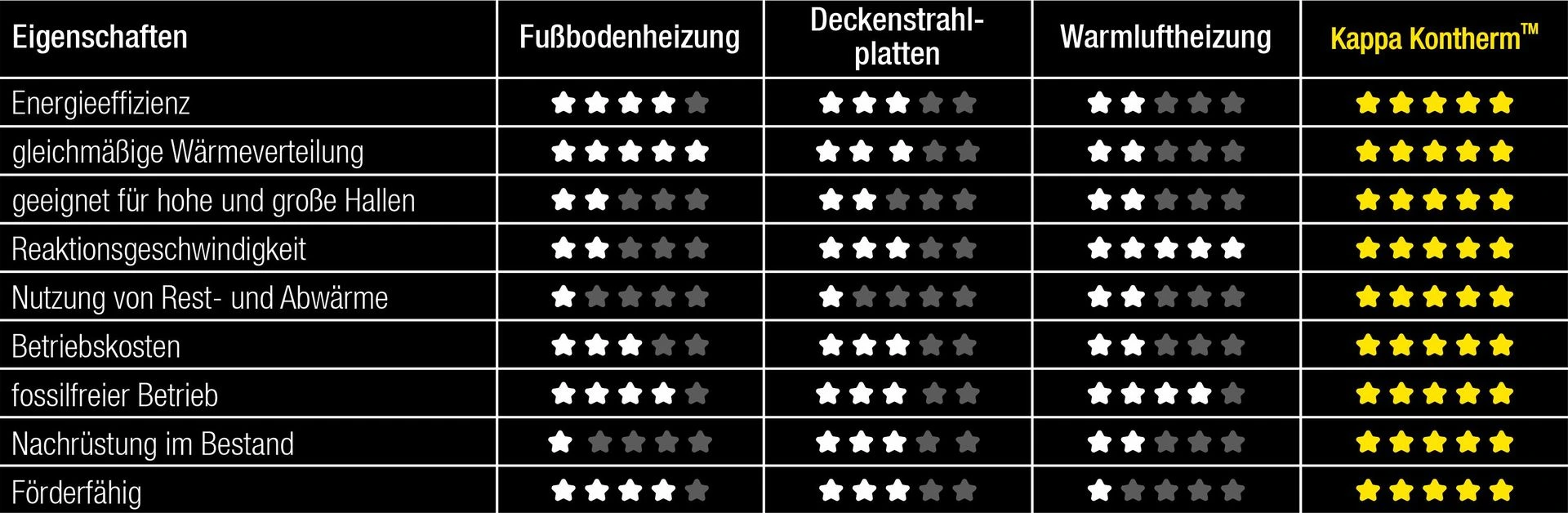
Each of these systems operates based on different physical principles and brings specific advantages and disadvantages in terms of energy efficiency, investment costs, temperature distribution, and operating costs. The right solution depends on the hall geometry, usage, temperature requirements, and available energy sources.

System comparison


Thinking holistically

Modern hall heating as a comprehensive concept

The differences between modern hall heating systems do not only lie in heat generation. What is crucial is how efficiently heat is distributed and how existing residual and waste heat can be utilized.


This is exactly where integrated system solutions come into play:

Example of modern hall heating technology:Kappa KonthermTM

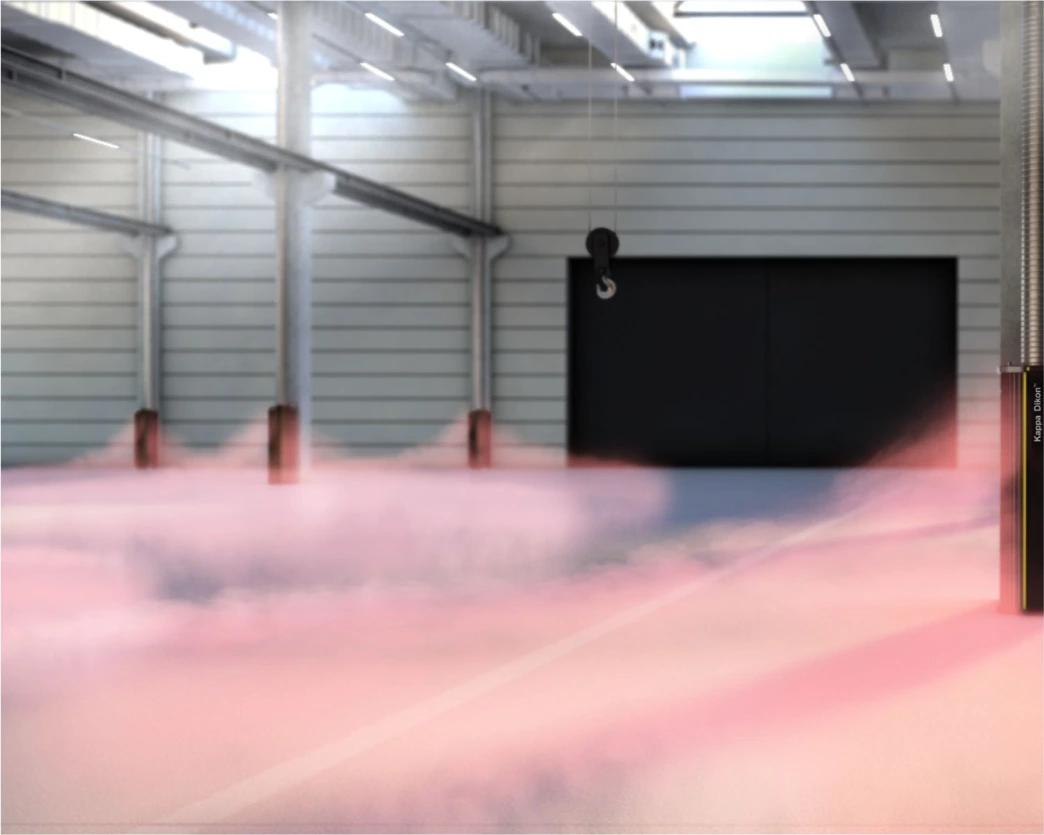
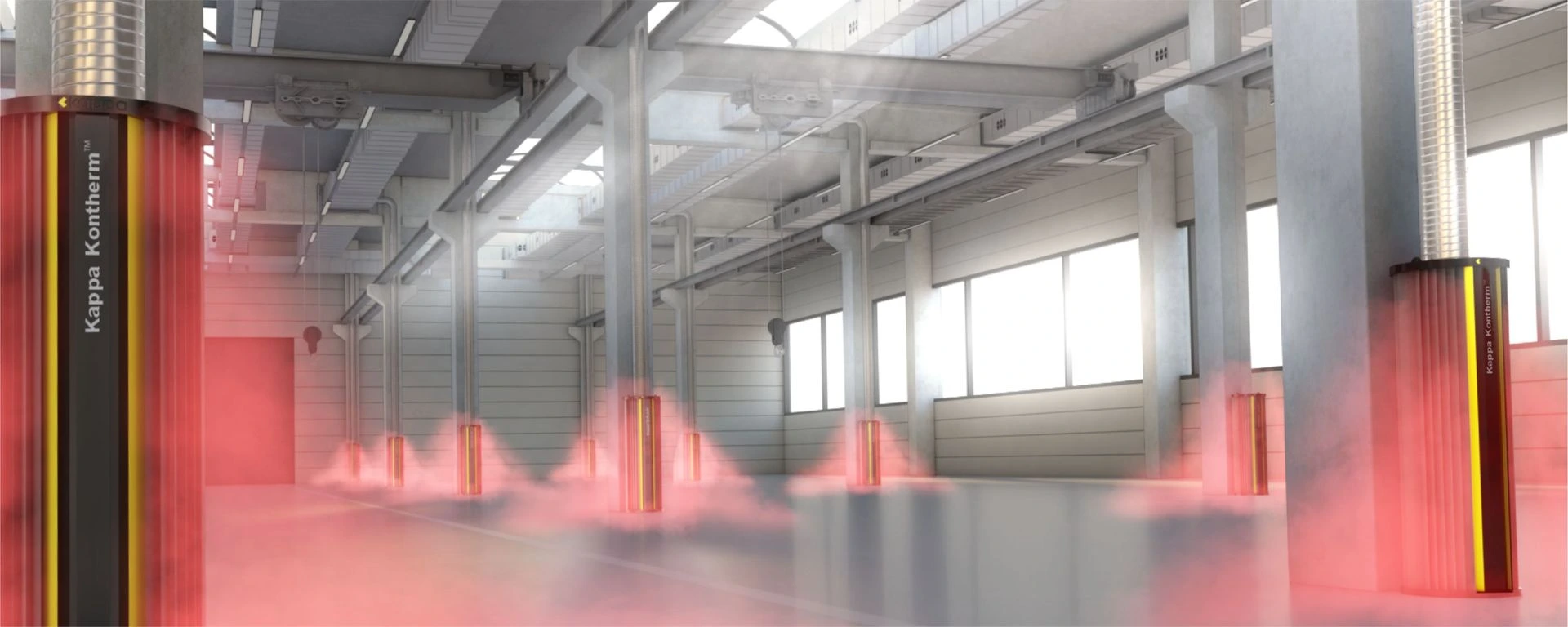
Kappa KonthermTM It has been specially developed for large industrial, production and logistics halls. Unlike many conventional systems, the focus is not solely on heat generation, but on the targeted distribution of heat within the area of use, as well as the utilisation of existing process and waste heat. This lays the foundation for energy-efficient and cost-effective hall heating.


Learn more about Kappa Kontherm

Request a free initial consultation

Find out what savings potential is in your hall.


REQUEST CONSULTATION


Interesting facts

FAQ


The most efficient system depends on hall height, usage, internal heat loads, and operating times. Systems that provide heat specifically in the work area and avoid unnecessary heat losses are particularly energy-efficient.

The most efficient system depends on hall height, usage, internal heat loads, and operating times. Systems that provide heat specifically in the work area and avoid unnecessary heat losses are particularly energy-efficient.

Warm air systems and modern zone-controlled systems respond significantly faster than, for example, underfloor heating. This is especially an important factor in shift operations or changing usage times.

In existing halls, heating systems are needed that can be retrofitted without major structural changes. Underfloor heating is usually unsuitable here, while decentralized systems can be integrated much more flexibly.

Yes, modern hall climate systems allow for both heating and cooling within an integrated system.

Many years of experience

Partner for hall heating

Kappa Filter Systems has many years’ experience in the design and implementation of heating and cooling solutions for industrial, production and logistics halls. Our technical support ranges from the refurbishment of existing buildings and the planning of new-build projects to assistance with regulatory procedures and funding schemes. The focus is on energy-efficient solutions tailored to the specific building geometry, intended use and available energy potential.

Let's talk about your project

Share your requirements for a hall heating system and goals with us. Our specialists are happy to support you from the initial consultation to implementation.

Kappa Filter Systems GmbH

AT-4407 Steyr-Gleink, Im Stadtgut A1

0043 7252 21 111

DE-40549 Düsseldorf, Wiesenstraße 21

0049 211 506 6978 0

office@kappa-fs.com

www.kappa-fs.com


*Required fields