Skip to Content
Contact
mail
call
Lufftechnik Anlagen warten

Maintenance and service for industrial extraction systems and ventilation technology

# Inspection
# Repair
# Spare parts management
# Modernization
# Digitalization


Request consultation

More than maintenance: lifetime support for extraction and filtration systems as well as indoor air technology

Air handling systems are often operated for decades. At the same time, production processes, machinery, legal requirements, and energy prices change. To maintain availability, energy efficiency, and operational safety over the long term, a single maintenance measure is usually not sufficient.

Continuous technical support throughout the entire lifecycle of the system is crucial. The condition of the system, wear and tear, energy consumption, operating data, and future modernization needs are regularly assessed. This allows technical risks to be identified early, unplanned downtimes to be avoided, and investments to be planned strategically.


Our lifecycle support includes
six coordinated services:


Service & Wartung

Service, maintenance, and inspection

Instandhaltung

Maintenance and repair

Modernisierung Anlagen

Optimization and modernization

Digitalisierung Lüftungsanlagen

Digitalization and monitoring

Ersatzteile

Spare parts and wear parts

Emissionsmessung

Workplace and emission measurements

When is lifecycle support useful?

If a air handling system in a production-critical hall breaks down, the entire production process often comes to a standstill. Outsourced maintenance provides peace of mind in such situations – not only where in-house expertise is lacking, but also where it needs to be supplemented: for example, with additional capacity, specialist know-how or a second expert opinion.

Kappa detects disturbances early, secures ongoing operations, and reduces unplanned downtimes. Additionally, energy efficiency, system condition, and optimization potentials are regularly checked throughout the entire lifecycle of the system.


Signs of increasing maintenance or modernization needs:

  • The suction power is no longer sufficient.
  • Energy consumption is rising.
  • Disruptions and repairs are increasing.
  • Production processes or machines have been changed.
  • Internally, the necessary expertise for certain technical tasks is lacking.
  • The control technology is outdated.
  • The condition of the system is not sufficiently documented.
  • Components and spare parts are hard to obtain.


Not every older system needs to be replaced. Depending on the condition and technical fundamentals, maintenance, optimization, or targeted retrofitting can be suitable alternatives.

For which systems lifetime management is suitable?

Service & maintenance are suitable for existing air technology systems from various manufacturers and age groups.

These include, for example:

  • Extraction systems and filter systems
  • Air purification systems
  • Welding fume extraction systems
  • Oil mist extraction systems
  • Industrial ventilation systems

The type of support required depends on the condition and usage of the specific system. Kappa can analyse the existing system and work with the operator to determine the necessary measures.


Specialised technical staff for service and maintenance 


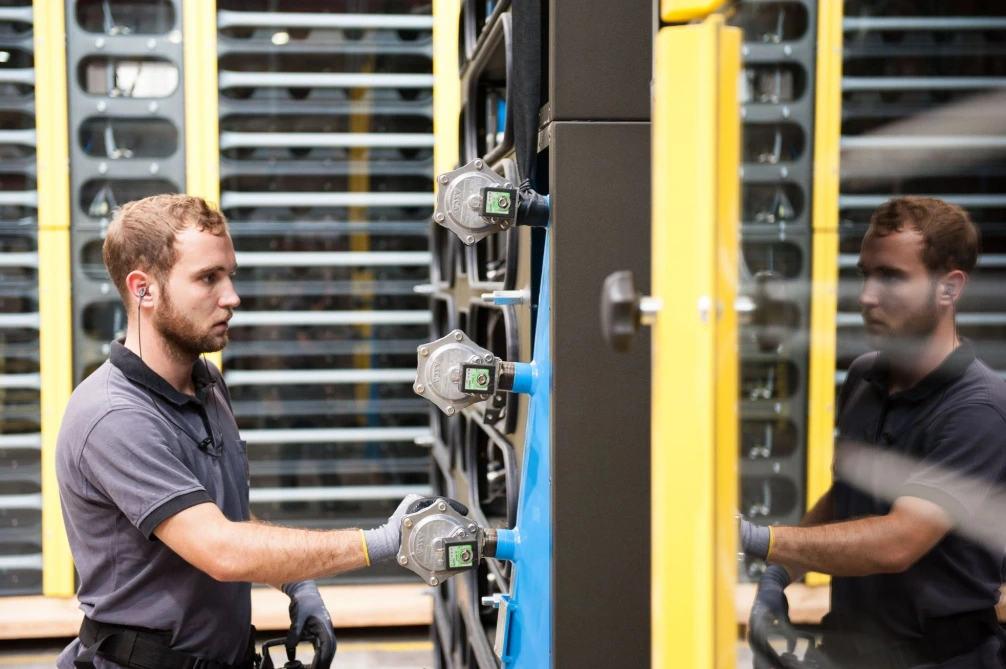
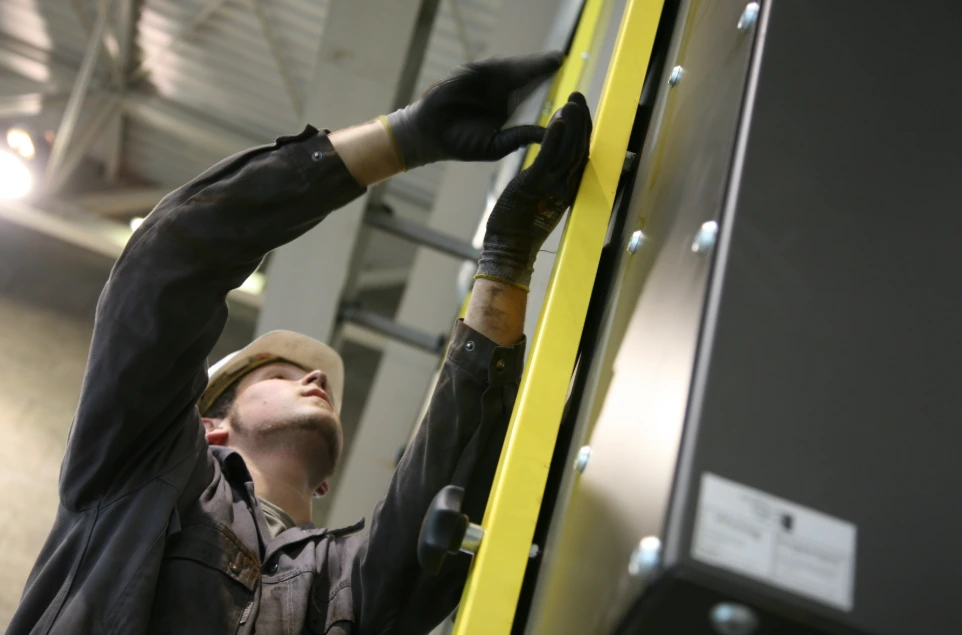
Our service consists of top trained service and commissioning technicians.

The field service is supported by a technical internal service with equally qualified technicians

This allows technical questions to be clarified directly, spare parts to be procured specifically, and measures to be prepared.


Optimize existing systems energetically

Energetic inspection

Kappa analyzes energy consumption, operating mode, and control of the system and derives specific optimization measures with potential savings and economic evaluations.

Bestandsanalgen digitalisieren

Digital RetroFitTM

Kappa digital RetroFIT™ enables existing systems to be monitored digitally at a later stage. Operating data is recorded and analysed to provide transparency regarding energy consumption and the condition of the system, and to detect faults at an early stage.


The legal necessity of inspection

To ensure the function of your air technology system permanently and to guarantee high availability, regular inspections and checks are required.

Furthermore, legislators require that air technology systems and extraction systems, especially for the removal of health-threatening substances, must be checked at regular intervals (usually annually). 

We support you in reliably fulfilling these legal requirements and your duty of care. 

With our inspection and service offerings, we detect wear and potential defects early, ensure the performance of your system, and help maintain the value of your investment in the long term.


Kappa Erfahrung

Specialist expertise in extraction and filtration systems, as well as ventilation and air-conditioning systems

Many years of experience in service and modernization of industrial air technology

For more than 30 years, we have been supporting industrial companies in the safe, economical, and long-term use of their air technology systems. With our services in the areas of service, maintenance, repair, modernization, and measurement technology, we complement operational maintenance wherever specialized knowledge of extraction, filtration, and air cleaning systems is required. This creates the foundation for high system availability, transparent system conditions, and informed investment decisions.


Service & Maintenance with Kappa quality


Contact us and find the right service package.


CONTACT US NOW


Important Information

FAQ

Lifecycle support accompanies a plant throughout its entire life, from the start of operations right through to modernisation. In the early years, the focus is on maintenance and inspection to ensure the plant remains in good working order. As the plant ages, the focus shifts to condition analysis and retrofit decisions – for example, when the control systems or sensors are no longer state-of-the-art. At the end of the life cycle, the question arises as to whether modernisation is more cost-effective than building a new plant. Kappa supports all three phases with the same points of contact and the same plant history.

The maintenance of industrial ventilation systems focuses on the regular inspection of specified components, the documentation of the system’s condition, and the rectification of any identifiable faults. It thus forms the basis for reliable system operation and, above all, determines whether the inspected components are functioning correctly at the time of the inspection and whether there is an immediate need for action. Depending on the system, this may include regular inspections, technical support, fault diagnosis and repair, the supply of spare parts, as well as technical analyses and measurements.

Lifecycle management goes beyond this point-in-time approach. It also takes into account changes in the condition of the plant, operational data, energy consumption and plant performance, as well as changes in production conditions. Monitoring, energy analyses and the assessment of technical anomalies provide a broader data basis for identifying at an early stage when optimisation, a retrofit or further modernisation may be advisable. Whilst maintenance thus primarily ensures the reliable operation of the plant, lifecycle management also supports the long-term planning of measures, budgets and investments.

Yes. In accordance with Section 32 of the Austrian Limit Values Ordinance (GKV), extraction and mechanical ventilation systems are subject to various testing requirements:

  • Commissioning: Before the first use of a system, effectiveness must be demonstrated through a representative measurement of the extraction or ventilation performance. This also applies after significant changes, expansions, or redesigns.
  • Annual Inspection: The systems must be checked at least once a calendar year, but no later than at intervals of 15 months, to ensure they are in proper condition.


Scope of the inspection: The inspection comprises a visual inspection (e.g. condition of filters, air intake devices, and the integrity of pipes and hoses) as well as a functional test (e.g. ventilation functions, airflow behaviour using smoke tubes, control dampers and existing fire dampers).

Documentation: The results and scope of the tests must be recorded clearly, in a verifiable manner and in writing – for example, in a test report.

Examiners: Examinations may be conducted by competent, suitable and authorised persons.


In Germany, extraction and ventilation systems for substances that pose a risk to health are subject to strict testing requirements under the Hazardous Substances Ordinance (GefStoffV) and the Industrial Safety Ordinance (BetrSichV), which are set out in detail in DGUV Rule 109-002 (‘Workplace Ventilation – Ventilation Measures’).

Reasons for examinations:

  • Before Commissioning: The system must be checked for completeness, correct assembly, and function before starting.
  • After Changes: After significant renovations, expansions, or repairs, a re-inspection is required.
  • Recurring: The system must be checked at fixed, regular intervals:

    • Particulate hazardous substances (dust, smoke, chips): A function and effectiveness test is required at least once a year (every 12 months). Air speeds, extraction performance, and filter performance are measured.

    • Gaseous hazardous substances (gases, vapors): Here, the hazardous substances regulation often allows for longer intervals of up to three years, unless the risk assessment requires otherwise.

    • Visual and functional inspection: Operators must conduct regular inspections (e.g., for damage or contamination).


Who is authorised to carry out inspections?

  • The inspections must be carried out by a qualified person. This person needs appropriate vocational training, work experience, and recent professional activity in the field of ventilation technology.
Yes. Maintenance and inspection procedures are documented in an audit-proof manner – this means that, in the event of an inspection by the authorities or an insurance company, complete evidence is available rather than having to be pieced together. The specific inspection requirements vary from country to country. Kappa tailors the documentation to the applicable regulatory framework.

Yes. The process is as follows: Kappa carries out an on-site survey of the system – components, year of manufacture, existing maintenance history, current condition.

This leads to a clear recommendation: routine maintenance, targeted repairs to individual components, a retrofit of the control and sensor systems, or – if the existing structure is no longer fit for purpose – modernisation.

Following the assessment, the customer receives a specific course of action rather than a general assessment.

Filters, fans, drives, seals, dampers, sensors and control systems are inspected – with a view to what actually happens if they are neglected:

  • Dirty filters increase pressure loss and thus energy consumption.
  • Worn bearings on fans or drives can lead to unexpected shutdowns.
  • Leaky dampers or seals reduce extraction performance without it being immediately noticeable during operation.
  • Faulty sensors lead to a control system that does not meet actual demand.

Maintenance tackles precisely these four weak points before they become a problem.

It is crucial to detect wear and tear before it leads to total failure – such as incipient bearing damage in a fan, which gives early warning through changes in vibration or temperature. Furthermore, the basic mechanical structure of a system – ductwork, housing – can often be used for considerably longer than the control technology: retrofitting the sensor technology and control systems extends the service life of the entire system without the need to replace the structural components.

The most significant factor is usually demand-based speed control via frequency converters, rather than continuous operation at full load. A fan that only runs when there is an actual need for it saves a noticeable amount of energy. Other areas for improvement include reduced pressure losses through cleaner filters and appropriate ductwork design, as well as operating times that are based on actual production requirements rather than a fixed schedule.

The Kappa Airdynamic™ System minimises resource consumption by continuously adjusting the output of ventilation systems to match actual demand. 

Which measure is most effective in any given case depends on the load profile and can be quantified precisely as part of a condition analysis.


Get in touch with us!

Share your requirements and goals with us. Our specialists are happy to assist you from the initial consultation to implementation.

Kappa Filter Systems GmbH

AT-4407 Steyr-Gleink, Im Stadtgut A1

0043 7252 21 111

DE-40549 Düsseldorf, Wiesenstraße 21

0049 211 506 6978 0

office@kappa-fs.com

www.kappa-fs.com