Up to 35% energy savings through intelligent air technology in production
Emulsion mist and fine dust in the production air directly affect occupational safety, air quality, and operating costs. A machine and plant manufacturer wanted to improve air quality in its production while simultaneously reducing energy consumption. An integrated solution combining air purification, heat recovery, and intelligent air volume control was implemented, creating clean workplaces, making heat energy usable, and significantly reducing the energy demand of the system.
Key figures
- Up to 35% energy savings compared to conventional systems.
- Heat recovery up to 140 °C.
- Residual dust content < 0.1 mg/m³.
- Significant CO₂ reduction through integrated energy technology.
- Intelligent and load-dependent air volume control.
The challenge
The construction of a new production facility placed a strong focus on manufacturing quality, energy efficiency, and sustainability. The objective was to create a future-ready production environment that provides optimal working conditions while minimizing resource consumption and operating costs.
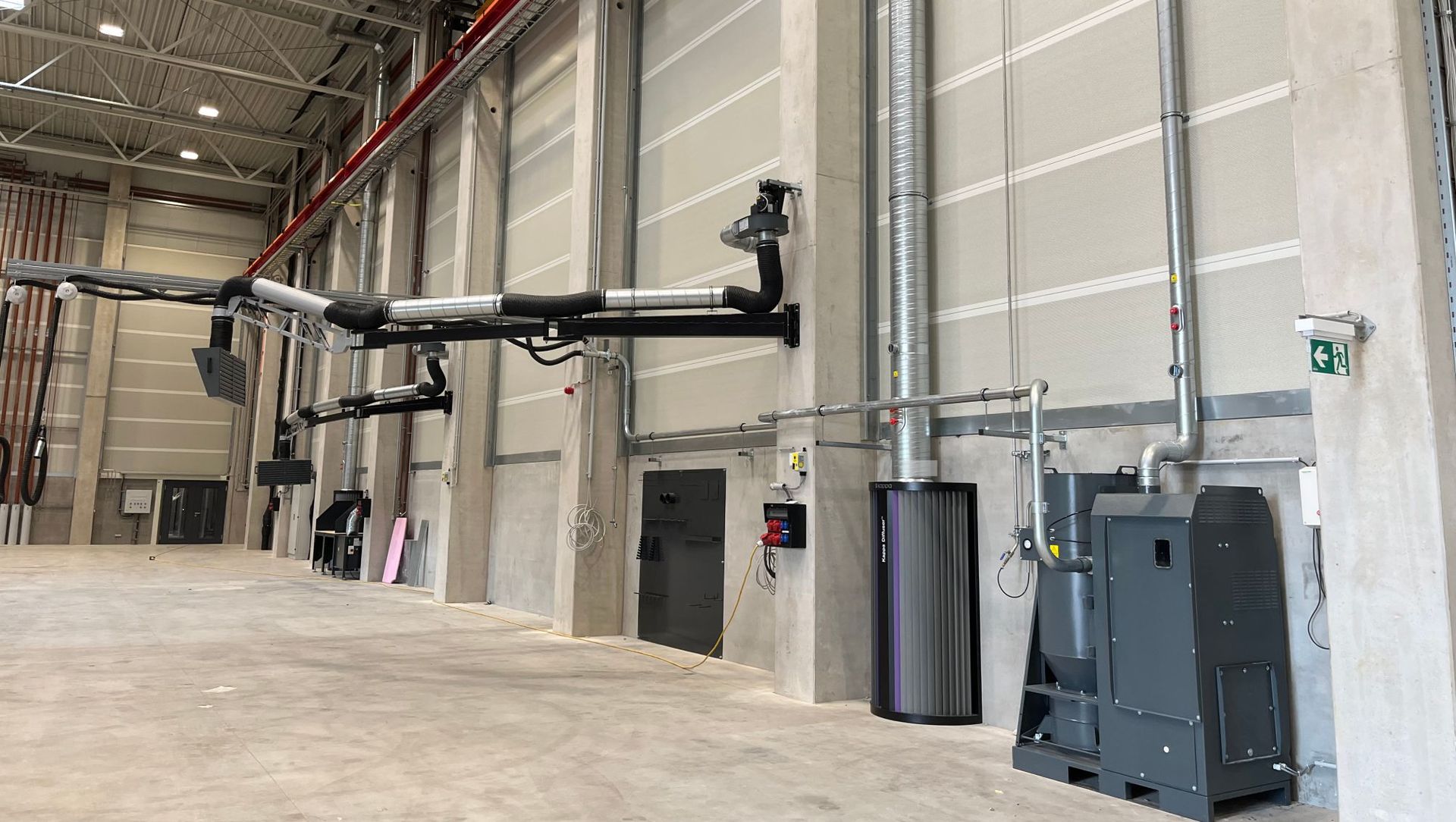
At the same time, production processes generate process exhaust air, welding fumes, fine dust particles, and other airborne emissions that can impact air quality and place high demands on air handling technology.
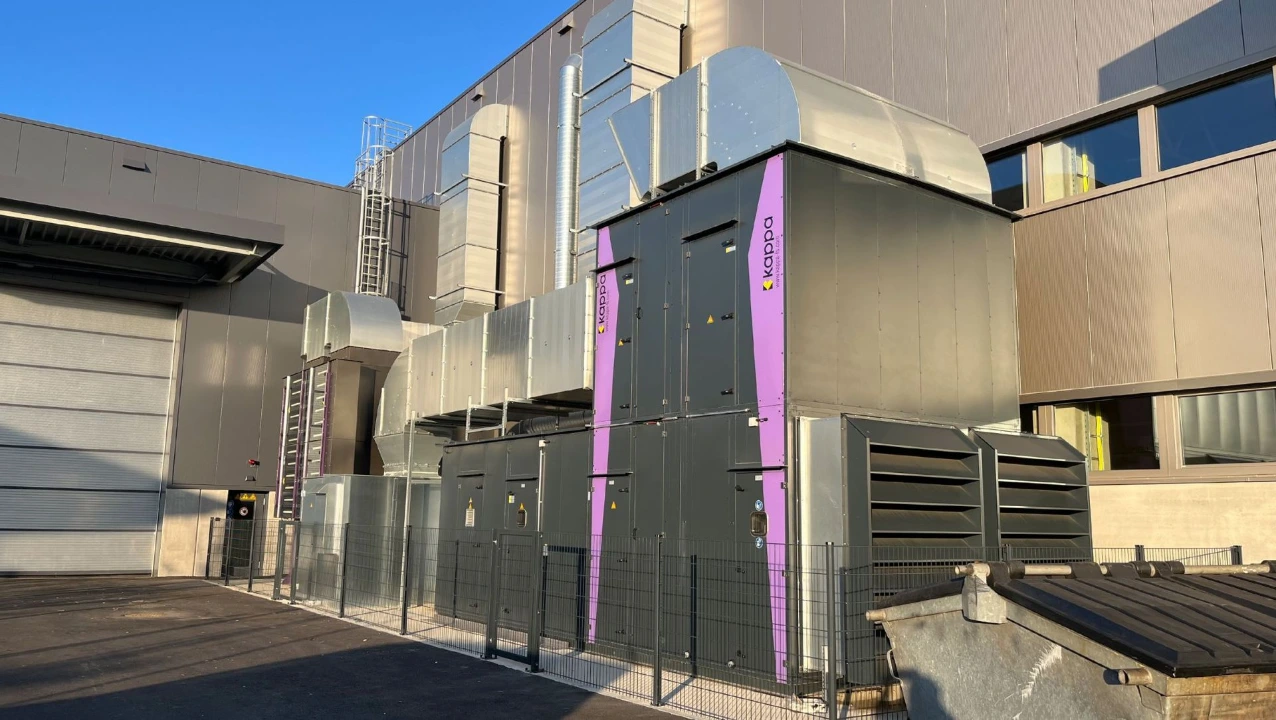
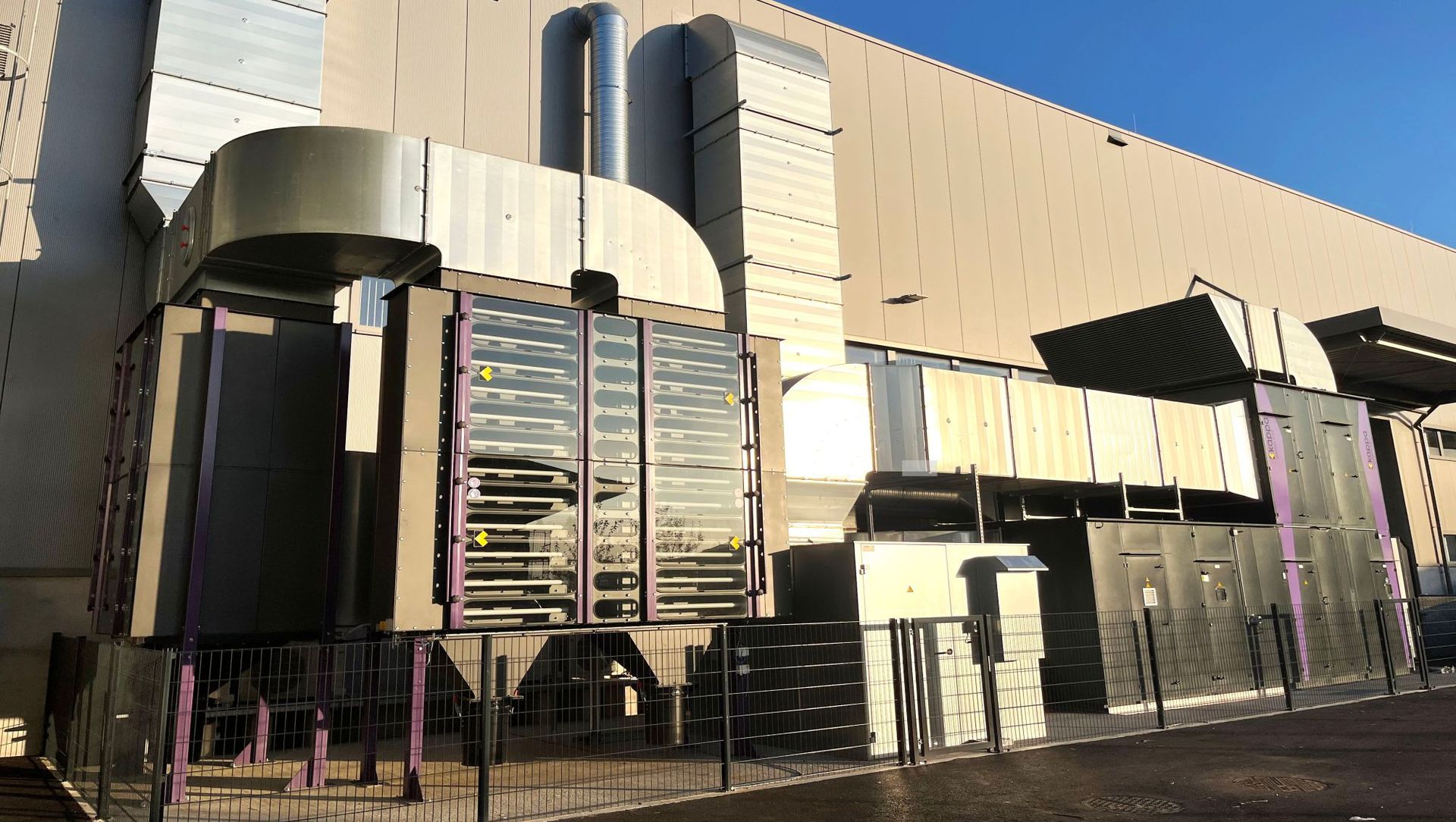
The project therefore required a solution that combines industrial air filtration, heat recovery, and demand-controlled fresh air supply within a single system. In addition, the concept needed to be flexible enough to support future production requirements and seamlessly integrate into the operations of a modern manufacturing facility.
The solution
Advantages of the solution
- Highly effective air purification for industrial applications.
- Heat recovery from process air.
- Reduced energy consumption.
- Lower CO₂ emissions.
- Intelligent performance control.
- High future-proofing and scalability.
The result
The benefits for industrial companies
- permanently lower energy consumption
- improved air quality in the workplace
- reduced CO₂ emissions
- lower operating costs
- efficient use of existing thermal energy
- higher energy efficiency
- compliance with increasing environmental and occupational safety requirements
- future-proof production technology.